Save our Tigers

0 comments


Introduction to Tigers

Statistics
There are currently 6 subspecies of tigers. They are Siberian or Amur tiger, Bengal or Indian tiger, Indochinese tiger, Malayan tiger, South China tiger and the Sumatran tiger.
Subspecies which have already faced extinction include the Bali, Javan and Caspian tigers.
We once had so many tigers that the population of Sumatran tigers was estimated at 1000. But today, the statistics for the tigers have plummeted so much (lesser than 400).


Habitat
They live from swamps to mountains.

There is a problem. Tigers are being poached. Why?
A tiger's canine teeth are used to make ornamental jewellery.
Claws are most often inlayed in gold to make pendants for necklaces.
Whiskers are believed to have magical powers to protect those who possess them from malicious curses.
The tails are believed to protect the owner from curses.
The skin is believed to contain magical powers. Paw soles are used to rituals. The forehead is believed to bring good luck to the owner.
Eyebrows are believed to protect owner and provide them with more strength.
Penis is aphrodisiacal.
Tigers’ galls are used to cure bone diseases.
Flesh is cooked and eaten.
Tiger fats are kept in a bottle by farmers to prevent their farms from damages caused by wild pigs.
Milk is used as medicinal remedies.
Tiger dung is used by shaman to remove spells and farmers plantation workers to keep wild pigs away.
Bones are grounded into powder and taken with a glass of warm water to cure rheumatism and headaches. The bone in the right front paw is drunk with warm water to treat headaches and is believed to possess the power to drive bad spirits away.


How are they poached?
Using snares, guns, poison, pit traps and box traps.

Tigers - It really is your choice

Take a minute and look at the images below..


Do these imperial creatures soothe your sight? If yes, act like they do.
Or, would you like to see more of these? (below)
It's really up to you. Do something.

Save our tigers. Report wildlife crime. Call 019 356 4194
For more information, you can visit these websites;

http://planetofthemonyets.blogspot.com/2010/03/tiger-blogfest-info.html, http://www.tx2.my/home.php,
http://www.malayantiger.net/v2/,
http://www.panda.org/

Hunted Tigers in India

"There doesn't seem to be much space in modern India for tigers," says longtime conservationist Belinda Wright. Widely hunted for their skin, which is made into decorative clothing, and other body parts that are used in folk medicine and magical rituals, tigers are becoming critically endangered.

Here's a video on Hunted Tigers in India.

SOURCE: http://www.explore.org/videos/player/india-hunted-tigers

If you're just nodding your head after all, convincing yourself that tigers are not important because they eat humans anyway. That’s simply because you stripped them off their habitats and prey and their natural environment. Wont you be a horrible horrible person if someone was to take away your place of shelter and all that’s essential for you to sustain life?

That’s what happens when you clear forests for plantation and development purposes. You eliminate their shelter from them. Then their source of food. And this is exactly why they feed on humans; having no choice left, they feed on alternatives

Tiger Cub

I'm sorry this came in last. As pledged for, this one's for 20/4/2010.
Here's a video from Youtube, courtesy of Woodland Park Zoo, Seattle, Washington.
Watch and admire the innocence and adorability of the cub. Then ponder over and think. Do you want more videos like this one? Do you want to ever see creatures like this again? Do you want this creature to continue its existence? Do you want to witness the increase in the population of this species in time to come? Just think. You have the answers.


And if you answered 'Yes' to any of the questions above, you know what to do.

Nano-based technology could make the Internet Hundreds of Times Faster

0 comments

TAU develops fiber optics technology to replace semi-conductors


Dr. Koby Scheuer's plastic "switch" for use in fiber optics cables.

It looks like a piece of gel that slips into the sole of your sneaker, but it's a new nano-based technology that can make computers and the Internet hundreds of times faster — a communications technology "enabler" that may be in use only five or ten years in the future, currently being created by Dr. Koby Scheuer of Tel Aviv University's School of Electrical Engineering.

Dr. Scheuer has developed a new plastic-based technology for the nano-photonics market, which manufactures optical devices and components. Reported in the journal Optics Express, his plastic-based "filter" is made from nanometer-sized grooves embedded into the plastic. When used in fiber optics cable switches, this new device will make our communication devices smaller, more flexible and more powerful, he says.

"Once Americans have a fiber optics cable coming into every home, all communication will go through it — telephone, cable TV, the Internet. But to avoid bottlenecks of information, we need to separate the information coming through into different channels. Our polymeric devices can do that in the optical domain — at a speed, quality and cost that the semi-conductor industry can't even imagine," Dr. Scheuer says.

Filtering the noise from the information

Every optical device used in today's communication tools has a filter. Whether it's the drive reader in your MacBook or the cable that brings cheap long-distance phone calls to your phone, each system uses filters to clean up the signal and interpret the different messages. In the next decade, fiber optic cables that now run from city to city will feed directly into every individual home. When that technology comes to light, the new plastic-based switches could revolutionize the way we communicate.

"Right now, we could transmit all of the written text of the world though a single fiber in a fiber optics cable in just a few seconds," says Dr. Scheuer. "But in order to handle these massive amounts of communication data, we need filters to make sense of the incoming information. Ours uses a plastic-based switch, replacing hard-to-fabricate and expensive semi-conductors."

Semi-conductors, grown on crystals in sterile labs and processed in special ovens, take days and sometimes months to manufacture. They are delicate and inflexible as well, Dr. Scheuer explains. "Our plastic polymer switches come in an easy-to-work-with liquid solution. Using a method called 'stamping,' almost any laboratory can make optical devices out of the silicon rubber mold we've developed."

The silicon rubber mold is scored with nano-sized grooves, invisible to the eye and each less than a millionth of a meter in width. A plastic solution can be poured over the mold to replicate the optical switch in minutes. When in place in a fiber-optic network, the grooves on the switch modulate light coming in through the cables, and the data is filtered and encoded into usable information.

One word of advice: "Plastics"

His biggest hurdle, says Dr. Scheuer, is in convincing the communications industry that polymers are stable materials.

"There is a lot of prejudice in this industry against plastics. But this approach could take us to a new level of communication," the researcher says. He also notes that the process is not much different from the way that mass numbers of DVDs are produced in a factory — except Dr. Scheuer works on a nano, not a "giant" micro, scale.

His device can also be used in the gyros of planes, ships and rockets; inserted into cell phones; and made a part of flexible virtual reality gloves so doctors could "operate" on computer networks over large distances.

Sony atracTable to compete with Microsoft Surface

0 comments

Sony atracTable - 35-inch multitouch interactive display

Microsoft Surface is going to get some serious competition from Sony atracTable, a 35-inch multitouch interactive display (developed by AtracSys & owned by Sony) that mirrors the gesture controlled inputs of Microsoft's solution, with the addition of face & emotional state detection features.

Sony's atracTable handles multiple finger based gestures with aplomb and identifies emotional state, age and sex of a person using the intuitive ICU (interactive communications unit). It is built with two motion sensor Sony ISS XCD-V60 camcorders that respond to any motion input or gesture input provided by the user. With the aid of these motion sensors, the Sony atracTable can also interact with objects and detect facial expressions like a smile, frown etc. to determine the mood or emotional state of the user. However, the major disappointment is that the price of this product is still undercover. Although on a positive note, the technology is proposed to be implemented in medical, gaming and industrial applications in the future. Meanwhile, watch these cool videos that promise a bright road to the future of touch & motion based interactive technology.


The Microsoft Surface table-like PC will have a competition from atracTable from Sony. The device is powered by technology from Swiss company and sold the tech to Sony. A 35-inch atracTable, prototypes of which are now out and feature a full HD screen with a high contrast will due out this June.


It uses two Sony ISS XCD-V60 cameras to create a 3D image. The cameras can be used to control a cursor, avatar or robot. Whether multi-touch input is supported is unknown. The device was originally developed for the medical field, but can also serve gaming, industrial or retail businesses.


The PC will likely be used in retail stores, as it allows interacting with any devices placed on top of it. The system can also analyze body movements of a body, arm, hand or finger. Sony says it can also read a user's age, sex and feelings such as happiness, anger, surprise, sadness and neutrality.
Pricing for the atracTable has not been revealed.

Gmail Drag And Drop Attachments

0 comments
Gmail

For Gmail users, are you aware that you can now drag-and-drop attachments to your emails? Last week, Google announced on the official Gmail blog the release of the new drag and drop attachments feature for Gmail. This new feature is automatically added to every Gmail account so users don’t have to install it via Gmail Labs. All you need to do is create a new email (Compose) and select any file you want to attach and drag it anywhere inside the Gmail interface and drop it. You can add as many attachments as you can as long as you don’t exceed the attachment size limit.

Here’s a screenshot I took while trying out this new feature.
Gmail Drag  And Drop

Right now, the Gmail drag and drop attachments feature only work on Google Chrome and Mozilla Firefox 3.6 browsers. This drag-and-drop attachments feature will definitely give users an easier and faster way to add attachments in Gmail. In my case, I won’t be using this feature because I use an email client – Mozilla Thunderbird to manage my Gmail account.

Btw, Google released another new Gmail feature that lets you insert calendar invitations. Pretty useful if you use Gmail alot and want to share your schedules and activities with your co-workers, family and friends.

Anyone tried the drag-and-drop attachments or the insert calendar invitations features on Gmail? What are the things you like or dislike about it? If there are any features or options that you’d like to add to them, what would it be? Please share your thoughts.

Improve Your Memory & Exercise Your Brain

0 comments
1. Convince yourself that you do have a good memory that will improve. Too many people get stuck here and convince themselves that their memory is bad, that they are just not good with names, that numbers just slip out of their minds for some reason. Erase those thoughts and vow to improve your memory. Commit yourself to the task and bask in your achievements — it’s hard to keep motivated if you beat yourself down every time you make a little bit of progress.

2. Keep your brain active. The brain is not a muscle, but regularly “exercising” the brain actually does keep it growing and spurs the development of new nerve connections that can help improve memory. By developing new mental skills—especially complex ones such as learning a new language or learning to play a new musical instrument—and challenging your brain with puzzles and games you can keep your brain active and improve its physiological functioning.
3. Exercise daily. Regular aerobic exercise improves circulation and efficiency throughout the body, including in the brain, and can help ward off the memory loss that comes with aging. Exercise also makes you more alert and relaxed, and can thereby improve your memory uptake, allowing you to take better mental “pictures.”
4. Reduce stress. Chronic stress, although it does not physically damage the brain, can make remembering much more difficult. Even temporary stresses can make it more difficult to effectively focus on concepts and observe things. Try to relax, regularly practice yoga or other stretching exercises, and see a doctor if you have severe chronic stress.
5. Eat well and eat right. There are a lot of herbal supplements on the market that claim to improve memory, but none have yet been shown to be effective in clinical tests (although small studies have shown some promising results for ginkgo biloba and phosphatidylserine). A healthy diet, however, contributes to a healthy brain, and foods containing antioxidants—broccoli, blueberries, spinach, and berries, for example—and Omega-3 fatty acids appear to promote healthy brain functioning. Feed your brain with such supplements as Thiamine, Vitamin E, Niacin and Vitamin B-6. Grazing, eating 5 or 6 small meals throughout the day instead of 3 large meals, also seems to improve mental functioning (including memory) by limiting dips in blood sugar, which may negatively affect the brain.

6. Take better pictures. Often we forget things not because our memory is bad, but rather because our observational skills need work. One common situation where this occurs (and which almost everyone can relate to) is meeting new people. Often we don’t really learn people’s names at first because we aren’t really concentrating on remembering them. You’ll find that if you make a conscious effort to remember such things, you’ll do much better. One way to train yourself to be more observant is to look at an unfamiliar photograph for a few seconds and then turn the photograph over and describe or write down as many details as you can about the photograph. Try closing your eyes and picturing the photo in your mind. Use a new photograph each time you try this exercise, and with regular practice you will find you’re able to remember more details with even shorter glimpses of the photos.
7. Give yourself time to form a memory. Memories are very fragile in the short-term, and distractions can make you quickly forget something as simple as a phone number. The key to avoid losing memories before you can even form them is to be able to focus on the thing to be remembered for a while without thinking about other things, so when you’re trying to remember something, avoid distractions and complicated tasks for a few minutes.

8. Create vivid, memorable images. You remember information more easily if you can visualize it. If you want to associate a child with a book, try not to visualize the child reading the book – that’s too simple and forgettable. Instead, come up with something more jarring, something that sticks, like the book chasing the child, or the child eating the book. It’s your mind – make the images as shocking and emotional as possible to keep the associations strong.

9. Repeat things you need to learn. The more times you hear, see, or think about something, the more surely you’ll remember it, right? It’s a no-brainer. When you want to remember something, be it your new coworker’s name or your best friend’s birthday, repeat it, either out loud or silently. Try writing it down; think about it.

10. Group things you need to remember. Random lists of things (a shopping list, for example) can be especially difficult to remember. To make it easier, try categorizing the individual things from the list. If you can remember that, among other things, you wanted to buy four different kinds of vegetables, you’ll find it easier to remember all four.

11. Organize your life. Keep items that you frequently need, such as keys and eyeglasses, in the same place every time. Use an electronic organizer or daily planner to keep track of appointments, due dates for bills, and other tasks. Keep phone numbers and addresses in an address book or enter them into your computer or cell phone. Improved organization can help free up your powers of concentration so that you can remember less routine things. Even if being organized doesn’t improve your memory, you’ll receive a lot of the same benefits (i.e. you won’t have to search for your keys anymore).

12. Try meditation. Research now suggests that people who regularly practice “mindfulness” meditation are able to focus better and may have better memories. Mindfulness (also known as awareness or insight meditation) is the type commonly practiced in Western countries and is easy to learn. Studies at Massachusetts General Hospital show that regular meditation thickens the cerebral cortex in the brain by increasing the blood flow to that region. Some researchers believe this can enhance attention span, focus, and memory.

13. Sleep well. The amount of sleep we get affects the brain’s ability to recall recently learned information. Getting a good night’s sleep – a minimum of seven hours a night – may improve your short-term memory and long-term relational memory, according to recent studies conducted at the Harvard Medical School.

14. Build your memorization arsenal. Learn pegs, memory palaces, and the Dominic System. These techniques form the foundation for mnemonic techniques, and will visibly improve your memory.

15. Venture out and learn from your mistakes. Go ahead and take a stab at memorizing the first one hundred digits of pi, or, if you’ve done that already, the first one thousand. Memorize the monarchs of England through your memory palaces, or your grocery list through visualization. Through diligent effort you will eventually master the art of memorization.

Windows Concept Phone

1 comments

Transparent Windows Phone Concept


Now a new phone in the series of concept phone that is Transparent Windows phone this is the futuristic phone made to target future generation window phone. This phone is design by a very talented designer and this phone is the master piece of concept technology phone.

Transparent Windows phone

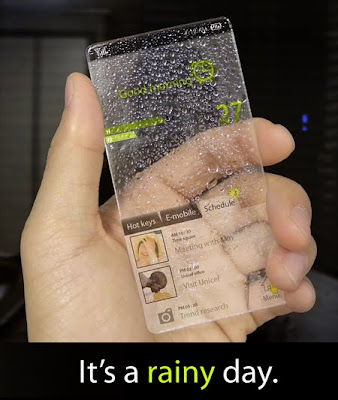
Transparent Windows Phone Concept designed as a thin, clear and transparent plastic sheet, which remains clear during all whether in sunny or in cold it become very transparent and very sleek. The user can write text messages or draw pictures on the surface of the phone according to different weather conditions which will later transform and show as SMS characters.

Transparent Windows phone

Transparent Windows Phone Concept has a quality that it can change itself according to the whether when it's sunny, the window phone looks very clear and when it's cold, the window phone becomes frosty. If the whether is raining, Transparent Windows phone looks like tiny droplets are all over the screen of the phone.

Transparent Windows phone

Transparent Windows Phone Concept is support all multimedia features including a good quality music player, bluetooth device that is connect very easily and a camera phone. This window phone also support all type of software that is normal used in to the multimedia phones.

Transparent Windows phone

David Turpin’s Concept Phones, the Future of Windows Mobile Smartphones

David Turpin became famous when he showed the world a couple of very innovative Windows Mobile concept phones, with sliding parts and virtual keypads. They looked like HTC material that would welcome Windows Mobile 7 on them and even Windows Vista on the most advanced UMPCs. This time, we’re dealing with concept devices designed for Velocity Mobile.

Velocity_Mobile_Concept_phone_1

They can be checked out below and in the picture above, but my personal favorite is the one with the orange edges, packing a very cool virtual keyboard. These are the future of WM smartphones, specially now that Microsoft is moving on to a more finger-friendly approach. Too bad that there are no specs associated to these concept phones.

Velocity_Mobile_Concept_phone_2

Velocity_Mobile_Concept_phone_3

Most Popular Social Websites & Their Office

0 comments

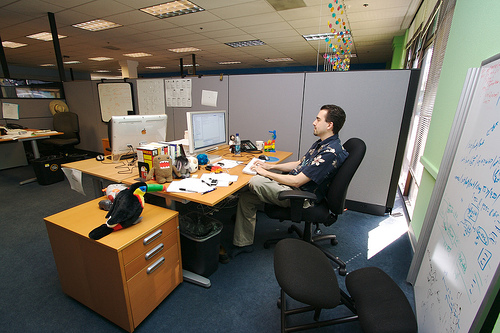
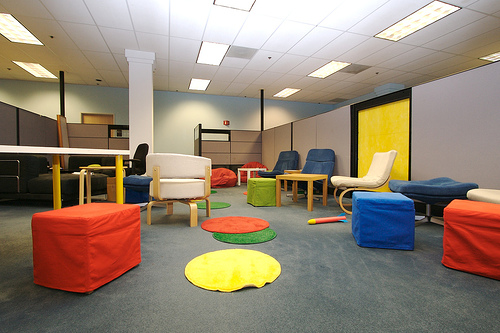
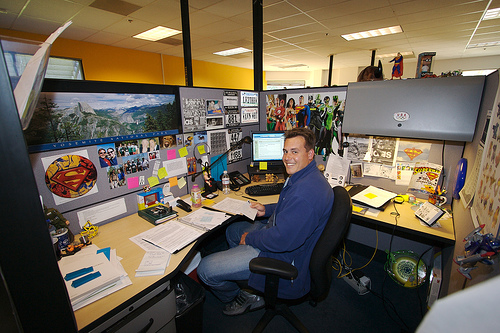
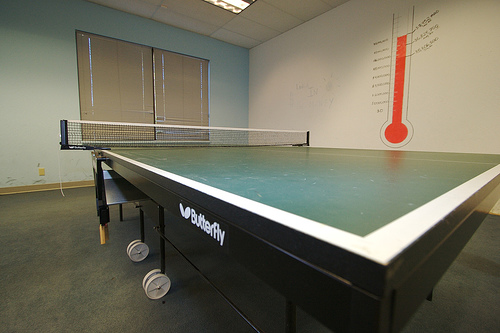
Have you ever wondered the office environment where the young and zealous engineers of Facebook, Twitter, YouTube, MySpace, Flickr, and LinkedIn work in? Today we present to you guys the awesome compilation of “Inside the Offices of the Top 6 Most Popular Social Websites

1. Facebook

With over 400 million registered users and more than 60 million status updates posted each day, Facebook is currently touted as the world’s most popular social networking website, beating arch-rival MySpace. The social networking juggernaut is co-founded by Mark Zuckerberg, Chris Hughes and Dustin Moskovitz, who were roommates and fellow computer science students at Harvard University.

Designed by the folks over at Studio O+A, the engineers at Facebook are now working in a really cool office located at Palo Alto, California, USA. Before the redesign and construction of the 150,000-square-foot office, each of every Facebook employees were consulted to find out what they wanted and what would their work experience better and more productive. Based from the photos taken below, the new office is indeed much more cozy and colorful. I personally love the DJ set and the bender on the wall!

2. YouTube

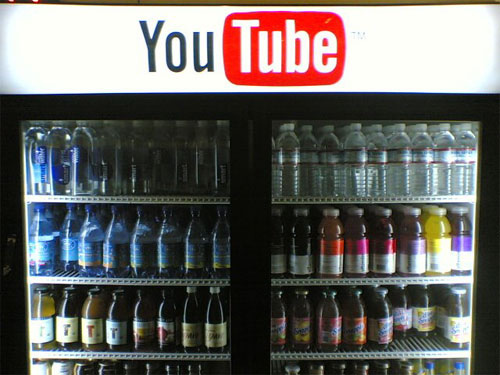
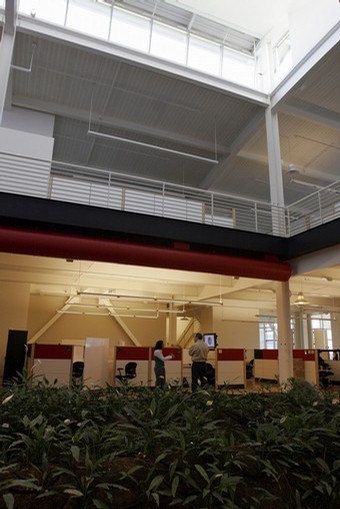
Acquired by search-engine giant Google in November 2006 for US$1.65 billion, YouTube is currently the world’s most popular video sharing website. On 9 June last year, YouTube video stream top a massive 1.2 billion in that single day. The video-sharing platform enables users to upload and share videos of different genres be it comedy, news broadcasts, music, etc. The YouTube headquarters is currently situated at San Bruno, CA, USA.

3. MySpace

Headquartered at Beverly Hills, California, USA, where it shares an office building with its immediate owner, Fox Interactive Media (owned by News Corporation), MySpace was once crowned as the world’s most popular social networking website but lost to Facebook, which has been experiencing ever-rising popularity in both Asia and Europe.

4. Twitter

Twitter is the world’s leading micro-blogging platform with over 54 million users, beating rival Plurk by a relatively huge margin. Twitter has recently moved into the sixth floor of 795 Folsom St., a 184,000-square-foot building, previously used by another social-networking firm, Bebo Inc., which is owned by AOL. Evan Williams’ wife Sara Morishige Williams was the brain behind the interior design of the 31,000 square foot office. So if you happened to past by the place, you can probably drop by and say ‘Hi’ to the Biz Stone, Evan Williams or Jack Dorsey, the co-founders of Twitter.

5. Flickr

Acquired by Yahoo! in March 2005 for an undisclosed fee, Flickr is one of the world’s largest and most popular image and video hosting website with over 3.6 billion images as of June 2009. Flickr is situated at 470 Sansome Street, San Francisco, USA.

6. LinkedIn

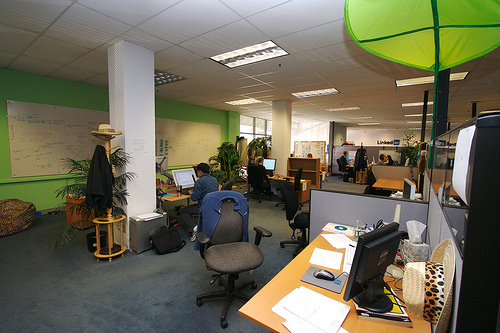
LinkedIn is a business-oriented social networking site founded in December 2002 and launched in May 2003 mainly used for professional networking. As of July 2009, it had more than 43 million registered users, spanning 170 industries. Its really cool office is located at Mountain View, CA, USA which is where the Googleplex (Google headquarters) is situated at.