New hologram technology brings 3-D to life

1 comments


Refractable holographic image of an F-4 Phantom Jet created on a photorefractive polymer at the College of Optics, University of Arizona, USA. Nasser Peyghambarian with a refreshable, holographic image of an F-4 Phantom Jet his team created on a photorefractive polymer at the College of Optical Sciences, the University of Arizona.
Holograms in 3-D no longer just science fiction

R2-D2 would be impressed.
Thirty-three years after he helped Princess Leia make an impassioned plea from afar in Star Wars, scientists are making 3-D telepresence a reality.
"It is no longer something that is science fiction, it is actually something that you can do today," says Nasser Peyghambarian, leader of a U.S. team that is busy sending 3-D moving holograms of Phantom jets and people from one location to another.
"We have demonstrated the concept and it works," says Peyghambarian, whose optical science team at the University of Arizona describes the new system in the journal Nature, released Thursday.
He and his colleagues say it is not quite ready for prime time. The "holographic telepresence" is limited to images 43 centimetres high, which is about how big Princess Leia's telepresence was in the Star Wars scene. Colour is also limited and the holograms' movements are halting as it takes two seconds for them to "refresh."
But Peyghambarian expects that within a few years life-size, full-colour, high-resolution holographs of people and objects will be popping out of tables and walls in research labs. And within seven to 10 years, he predicts they could be popping out of conferencing, medical, design and entertainment systems.
The people and objects will look real, Peyghambarian says, but if you try to reach out and touch them, there would be "nothing there."
Several companies are racing to produce 3-D television and conferencing systems so people can attend virtual meetings, reducing the need for travel and time away from home.
But Peyghambarian says most systems use just two perspectives, while the holographic telepresence has 16 and does not require 3-D glasses. His team is aiming for hundreds of perspectives showing objects and people from all angles, which is much closer to what the eye sees in the real world.
"I don't think there is any fundamental physics that would prevent us from getting there," he told reporters in a webcast last week.
At the heart of the new system is a multicolour, holographic display that refreshes every two seconds and gives the effect of quasi-real-time updating, using a new "photorefractive polymer" as the recording material. The images are taken by regular cameras at multiple angles in one location and sent to another location using Ethernet communication and then projected with the help of lasers on the computerized hologram setup.
The prototype described in the Nature paper had a 25-centimetre screen, but Peyghambarian says they now have a 43-centimetre system up and running. It uses 16 cameras to photograph objects from different angles. The more cameras used, the higher the resolution of the holograph, says Peyghambarian, who says an array of cameras in his Tucson office and a fast Internet connection would enable him to give a tele-presentation in New York.
"At the other end, in New York, there would be the 3-D display using our laser system," he says. "Everything is fully automated and controlled by computer."
The system has what the scientists call 'full parallax': "As you move your head left and right or up and down, you see different perspectives. This makes for a very lifelike image," says Peyghambarian. "Humans are used to seeing things in 3-D."
There is also an audio option so lifelike, holograms could speak and interact with audiences.
The researchers have patents pending on both the material and optical system and are particularly keen on the possibilities for telemedicine.
"Especially for brain surgery, surgeons at different locations around the world can observe in 3-D, in real time, and participate in the surgical procedure," they conclude in their paper.
Lead author Pierre-Alexandre Blanche says another early application might be in the "military for command and control 3-D battle maps" and holographic advertising.
"The next step will be to have a smaller, faster display to interest the entertainment market," he says, noting that there is "still some hard work" to do before that happens.

New hologram technology brings 3-D to life

Executives may not be able to beam a full three-dimensional image of themselves across the world just yet but researchers are a step closer to 3-D real-time images, an advance in holographic technology that could make video conferencing far more lifelike.
Nasser Peyghambarian of the University of Arizona and colleagues said on Wednesday their new holographic technology can project a near 360-degree image to another location that updates every two seconds.
Known as three-dimensional telepresence, the technology addresses shortcomings of current holograms, which give the illusion of 3-D but leave out the rear view, said Peyghambarian, whose study appears in the journal Nature.
"If you look at the 3-D object, we show it is very much like if you look around you. It's the closest to what you see compared to any other technology," Peyghambarian, who also holds a position at the National Science Foundation, said on a telephone briefing.
He said the earliest use of the technology could be in movies, given the popularity of 3-D films such as "Avatar."
"We foresee many applications, including for example, car or airplane manufacturing. They can look at the hologram and design the system they have in real-time and look at the model and make changes on it as they go," Peyghambarian told the briefing.
Surgeons around the world also could participate in complex operations at the same time, he said.
To create the hologram, cameras take color images at multiple angles and send them over an Ethernet line. In the lab model, images are projected onto a transparent plastic panel and refreshed every few seconds.
Future displays will lie flat on a table and the system will create an optical illusion that the image is floating above the screen.
The three-dimensional telepresence technology differs from 3-D technology in several ways.
With 3-D, one perspective is projected to one eye and another perspective is projected to the other, which is why people wear special glasses. With the hologram, no special glasses are needed and the number of perspectives is only limited by the number of cameras used.
In a videoconference, this means people sitting on one side of a table see the front of a person, people on the side would get a side view and people in the back would see their back.
The technology builds on earlier work by the same group, which in 2008 reported a black and white 3-D image that could be updated every four minutes.
The new system is more than 100 times faster.
"This breakthrough opens new opportunities for optics as a means to transport images in real time," Lynn Preston, director of the National Science Foundation's Engineering Research Centers program, said in a statement.
Peyghambarian said the team still needs to work out some issues, including improving the screen and reducing the system's power demands, which will take about two years.
It will be far longer before the system can be used by ordinary consumers.
"I don't think you can see these in our houses in less than seven to 10 years," he said.

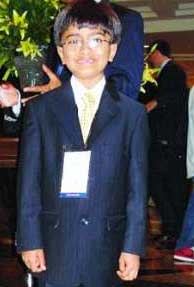
7yr old Arya Ika, youngest member of Obama's crew

0 comments
U.S.President Barack Obama's business team not only consists of 500 delegates but also a seven year old kid, a student from Southborough, Massachussets. Arya Ika , who is studying in second grade is accompanying Obama on his trip to India to bring some best deals for his family owned innovative health technology firm reports Pradeep Thakur of Times Of India.
7yr old Arya Ika, youngest member of Obama's crew
Born to an Indian-American couple, the Harry potter lookalike comes from Fay school which by coincidence is the same school to which U.S. President John.F.Kennedy also went to. The institution has granted special leave to the lad so that he could be a part of this historic trip, where both India and the U.S. signed several agreements, including breaking the decades old economic and technological barrier that was imposed on India after its two nuclear tests.

Dressed in formals Ika was seen networking with other Indian and American delegates in between sessions and became the star attraction as everyone was curious to know what got the little fellow to the serious business sessions of Obama. "I want to meet Obama, and become the future President of the U.S." said Ika while explaining the reasons behind his India trip, where he could pick up his first lessons in public administration.

Ika comes from a family which migrated from Hyderabad to Massachuessets 30 years ago and set up their innovative health care system firm, which now employs more than 350 Americans. The Ika System provides innovative health technology to insurance firms helping them bring quality care to patients at lower costs. The company's gross turnover is around $500 million.

Overcoming Fear of Public Speaking

0 comments
“According to most studies, people’s number one fear is public speaking. Number two is death.” - Jerry Seinfeld
If you have the fear of public speaking, you are not alone. You must first recognize what “fear” is. Fear is the anticipation of pain. Is your fear real or imagined?
Here are some great insights into Overcoming Fear of Public Speaking.

Steps to Overcome Fear of Public Speaking -  

  1. Fears – The fear of being judged, making a mistake, not measuring up, getting hurt either mentally or physically can get in the way of a good performance (speech, seminar, sales presentation, etc). Remember that people in the audience really want you to succeed. Nobody is standing there hoping you’ll be boring or bad. If you are coming from an authentic place, and you cover the material with clarity, you’ve won 3/4 of your inner battle with fear.
  2. Learn how to enroll and engage your audience - If you haven’t yet taken a professional development course on public speaking, consider finding a public speaking training course appropriate for your needs. Learning the art of public speaking can enhance your results in a boardroom, in a sales presentation, and even accelerate your climb up the corporate ladder. It is a must-skill for any executive and/or business owner.
  3. Practice - Find business organizations, networks and clubs in your area (such as Toastmasters) that can afford you the opportunity to practice. Remember to choose topics that you are already an expert on. Speaking on a topic that you are not familiar with will increase your stress, and impede on your performance.
  4. Use recording software - Record everything on your PC/laptop. Review it to see where you can improve. Have speaking pros attend your live presentation to give you feedback. Allow yourself the opportunity to learn more every time you go out.
  5. Remember, even the top professionals learn something new every single time they go out!

Ranji Trophy Surprise by Deepak

0 comments
Deepak Chahar
Deepak Chahar

The teenage cricketing sensation Deepak Chahar from Rajasthan has completely dismantled the whole of the batting line up Hyderabad on the opening day of the Ranji Trophy 2010-11.
He was simply unstoppable right from the start and everything related to the match that brought out the genius in him is now registered in records of the first class cricket.
He left every batsman of Hyderabad crying for help as he delivered 2 maidens in 7.3 overs taking 8 wickets at the cost of a meager 10 runs. He has found praise from all counters with Rajasthan Coach Harish Joshi said: “He has good length and line, and swings the ball both ways.”
As of now Maharashtra’s Vasant Ranjane still holds the record of a fantastic Ranji debutant with 9 wickets to his credit for 56 runs against Saurashtra in 1956-57, which Deepak Chahar just missed. But the debutant cricketer is bound to excel and has the ability to move the ball well in the air taking advantage of the conditions at hand.
He did not let any of Hyderabad players to reach a double figure in terms of runs and the son of a retired air force man has proved the selectors correct who spotted him in the Under-16 championships and chose for Ranji from the Under-19s team for which he has been playing for 4-5 years now.
Deepak stuck well in the 78 minutes 93 balls affair sending the team to the pavilion for 21 runs to boast of.
This terrific performance reminds of the previous records in the history of the game. It was in 1983 that Essex bowled Surrey out for just a total of 14 runs. Three cheers to the teriffic teen Deepak Chahar!!!

Indian grads app becomes a huge hit after Steve Jobs' praises

0 comments
"That was really special. We got the biggest stamp of approval we could have gotten," says Akshay Kothari Co-founder and CEO of Alphonso Labs, which produced the Pulse app, referring to the endorsement from Apple CEO, Steve Jobs. The young Indian grads from Stanford University saw a significant boost when the Apple Guru heaped praises upon their iPad application at the Apple Developers Conference.
Indian grads app becomes a huge hit after Steve Jobs' praises


Pulse is an elegant news reading application for iPhone, iPad and Android devices created by Akshay Kothari and Ankit Gupta. This mobile application aggregates news from numerous websites and is one of the top-selling news apps for the iPad and iPhone. Its Android app allows users to assemble content from as many as 60 publications. Users also can touch a link that takes them to the actual publication's website.

The company has launched version 2.0 of their Pulse News Reader for iPad. The revised version, Pulse 2.0 expanded to 60 sources of news across five pages, or 12 feeds per page. It is also designed in a way that the user can manage news feed sources. Another interesting feature in the new version called "Pulse Bazaar", provides a way to browse and discover good news sources that you didn't know about. As of now, Pulse 2.0 is an iPad-only app. It is expected that the company will release a new version for the iPhone and Android platforms in the coming weeks.

The idea was sparked at a Stanford course called 'Launch Pad' for aspiring entrepreneurs in which challenge was to create a product in the course of 11 weeks. "The first week of class, we decided we're going to do something for our iPads, and we released our app in six weeks," Kothari said. After the success of the app, Alphonso Labs now has six full-time employees and is moving to an office space of its own.

Although the company had a short period of trouble when Apple removed Pulse from the store following complaints of infringement by the New York Times, it was later reinstated upon clarifying that Pulse is essentially an RSS reader and does no scraping.

It is also reported that Alphonso Labs has raised $1 million in seed funding from Redpoint Ventures, Greycroft Partners, Mayfield Fund and Lightspeed Venture Partners.

The Pulse app for iPad costs $1.99 and 99 cents for the iPhone and mobile Android devices. However, the company declined to disclose revenue figures. The biggest competitor for Pulse is Flipboard which also has got great reviews for its products.

The New Nokia C7

0 comments
c7
The Nokia C7, operating on the latest Symbian^3 OS, has finally been packed up and the shipments of this 3.5” AMOLED touchscreen fitted handset have begun.
Crafted in a sophisticated blend of glass and stainless steel, this smartphone proffers quick access to the deluge off applications hosted at the Ovi Store. Facebook and Twitter updates can be directly accessed via the homescreen, along with several email accounts like Windows Live Hotmail, Yahoo! Mail and Ovi Mail.

  1. Beautifully crafted design

    • A sleek design constructed from polished stainless steel and glass.
    • Videos and images look sharp on the vivid 3.5" high-resolution display.
    • Three home screens you can personalise with contacts, apps and more.
    • Use finger gestures – pinch to zoom, flick to scroll and tap to select.
    • View all running apps and tap the screen to easily switch between them.
  2. Integrated social networks

    • Get live updates from Facebook and Twitter directly on the home screen.
    • Update your status across all your social networks at the same time.
    • Add social events to your calendar easily with just one click.
    • Share your location through Facebook and meet friends who are close by.
    • Post comments and photos directly from the home screen.
  3. Apps and more from Ovi Store

    • Choose from 1000s of apps including Sports Tracker and Here and now.
    • New apps constantly added to Ovi Store – many for free.
    • Try out new games and buy the ones you like.
    • A wide selection of wallpapers and themes for every taste and style.
    • Download podcasts – news, sports, entertainment and more.
    • Visit Ovi Store.
  4. Maps with free GPS navigation

    • Find the best route and get to your destination on time with Ovi Maps.
    • Get free lifetime navigation with turn-by-turn voice guidance.
    • Record your own voice guidance with Own Voice and share on Facebook.
    • Discover nearby restaurants, landmarks and other points of interest.
    • Use the Nokia Bluetooth Headset BH-217 for clear voice navigation as you walk.
  5. The best in mobile entertainment

    • Capture high-quality photos and HD video using the 8 megapixel camera.
    • Watch National Geographic, CNN, BBC and many more channels with Web TV.
    • Listen to music on your car stereo with the built-in FM transmitter.
    • Flip through album art and make playlists of your favourite songs.
    • Play music out loud on the powerful Nokia Mini Speaker MD-9.
  6. Powered by Symbianˆ3

    • Enjoy over 250 new features from the Symbianˆ3 operating system.
    • Customise your phone in more ways than ever.
    • Easier, more intuitive touch-screen controls.
    • Run multiple apps without sacrificing battery life.
    • Develop your own apps with ease.
  7. Design
  8. Hardware
  9. Software & applications
  10. Communications
  11. Sharing & Internet
  12. Navigation
  13. Photography

Design


Dimensions
  • Size:117.3 x 56.8 x 10.5 mm
  • Weight (with battery): 130 g
  • Volume: 64 cc
Product dimensions
Display and user interface
  • Screen size: 3.5"
  • Resolution: 16:9 nHD (640 x 360 pixels) AMOLED
  • 16.7 million colours
  • Capacitive touch screen
  • Orientation sensor (Accelerometer)
  • Compass (Magnetometer)
  • Proximity sensor
  • Ambient light detector
Keys and input methods
  • Physical keys (menu key, call key, end key, power key, lock key, volume keys, voice key, capture key)
  • Finger touch control
  • On-screen alphanumeric keypad and full keyboard
  • Dedicated camera and volume keys
  • Possibility to use capacitive stylus
  • Handwriting recognition for Chinese
Colours
  • Available in:
    • Frosty metal
    • Charcoal black
    • Mahogany brown
  • Colour availability varies by country
Personalisation
  • Three customisable home screens:
    • menu
    • widgets
    • themes
    • shortcuts
    • icons
  • Customisable profiles
  • Ringtones: mp3, AAC, eAAC, eAAC+, WMA, AMR-NB, AMR-WB
  • Themes
    • wallpapers
    • screensavers
    • audio themes
    • pre-installed themes
    • changeable colour themes

Hardware


Power Management
  • BL-5K 1200 mAh Li-Ion battery
  • Talk time (maximum):
    • GSM up to 576 mins
    • WCDMA up to 318 mins
  • Standby time (maximum):
    • GSM up to 555 h
    • WCDMA up to 656 h
  • Video playback time (H.264 720p, 30 fps, maximum): up to 6.5 h
  • Video recording time (H.264 720p, 25 fps, maximum): up to 3.8 h
  • Video call time (maximum): up to 160 mins
  • Music playback time (offline mode, maximum): up to
    54 h
Operation times may vary depending on radio access technology used, operator network configuration and usage.
Memory
  • Internal memory: 8 GB
  • MicroSD memory card support up to 32 GB (max total 40 GB)
Operating Frequency
  • GSM/EDGE 850/900/1800/1900
  • WCDMA 850/900/1700/1900/2100
  • Automatic switching between WCDMA and GSM bands
  • Flight mode
Data Network
  • GPRS/EDGE class B, multislot class 33
  • HSDPA Cat9, maximum speed up to 10.2 Mbps, HSUPA Cat5 2.0 Mbps
  • WLAN IEEE802.11 b/g/n
  • TCP/IP support
  • Capability to serve as data modem
  • Support for MS Outlook synchronisation of contacts, calendar and notes
Requires data service. Data services may not be available in all networks. Data transmission speeds may be as high as HSDPA 10.2 Mbps, but may vary based upon network capabilities and other conditions. The establishment and continuation of a data connection depends on network availability, provider support and signal strength.
Connectivity
  • Bluetooth 3.0
  • 2mm Charging connector
  • Micro USB connector and charging
  • High-Speed USB 2.0 (micro USB connector)
    • USB On-the-Go
  • 3.5 mm AV connector
    • FM Radio
    • FM Transmitter

Software & applications


Software platform & user interface
  • Symbian^3 OS for Nokia
  • Java MIDP 2.1
  • Qt 4.6.2, Web Runtime 7.2
    • HTML 4.1
  • Software updates Over the Air (FOTA) and Over the internet (FOTI)
  • Flash Lite 4.0
  • OMA DM 1.2, OMA Client provisioning 1.1
Applications
  • Key applications: Calendar, Contacts, music player, internet, messaging, photos, Ovi Store, Maps, Videos, Web TV, Office document viewers, Video and photo editor, Mail, Radio
  • PC Applications: Nokia Ovi Suite, Nokia Ovi Player
Personal Information Management (PIM)
  • Detailed contact information
  • Calendar
  • To-do list
  • Notes
  • Recorder
  • Calculator
  • Clock

Communications


Email and messaging
  • Easy-to-use email client with attachment support for images, videos, music and documents .doc/ .docx, .xls/ .xlsx, .ppt/ .pptx, .pdf, .zip
  • HTML support for email
  • Unified email client for multiple protocols: Yahoo!® Mail, Gmail™, Windows Live™, Hotmail and other popular POP/IMAP services, Mail for Exchange, IBM Lotus traveler
  • Email web widget for home screen
  • Unified MMS/SMS editor
  • Conversational view for SMS
  • Push email and expanded portal support available through Nokia Messaging for email and instant messaging
* Some services may be available only via downloading or dependent on the market.Only devices that offer compatible multimedia message or email features can receive and display multimedia messages. Content appearance may vary. Some images and ringtones can not be forwarded.
Call management
  • Contacts: advanced contacts database with support for multiple phone and email details per entry with personal thumbnail pictures and video clips
  • Smart dialling to find phone numbers quickly
  • Speed dialling, voice dialling (speaker independent) and voice commands
  • Logs of dialled, received and missed calls
  • Conference calling
  • Integrated handsfree speaker
  • Video calling
  • Active noise cancellation for clearer calls.

Sharing & Internet


Browsing and internet
  • Full web browsing of real web pages
  • Web browsing with touch control
  • Supported markup languages: HTML, XHTML MP, WML, CSS
  • Supported protocols: HTTP v1.1, WAP
  • TCP/IP support
  • Visual history, HTML and JavaScript support
  • Flash Lite 4 will support a majority of Flash Player 10.1 content
  • Nokia Mobile Search
  • RSS reader
  • Support for streaming video
  • Unified home screen access to Facebook and Twitter through Ovi by Nokia Social client
  • Social networking profiles visible in phone contacts
  • Upload and view photos and video and see locations via Ovi by Nokia Social client
  • Social networking events visible in phone calendar

Navigation


GPS and navigation
  • Integrated GPS, A-GPS receivers
  • Ovi Maps with free car and pedestrian navigation
  • Wi-Fi network positioning
  • Compass and accelerometer for correct orientation of display
  • Use Nokia Ovi Suite to get the latest country maps for Ovi Maps for free
* Downloading of maps over the air may involve transferring large amounts of data. Your service provider may charge for the data transmission. The availability of particular products, services, and features may vary by region. Please check with your local Nokia dealer for further details and availability of language options. These specifications are subject to change without notice.

Photography


Camera
  • 8 megapixel camera
  • Fullscreen 16:9 viewfinder with easy on-screen touch controls
  • 3rd generation dual LED flash
  • Face recognition software
  • Full focus
  • Focal length: 4.3 mm
  • F number/aperture: F2.8
  • Zoom up to 2x (digital) for still images
  • Zoom up to 3x (digital) for video
  • Secondary camera for video calls (VGA, 640 x 480 pixels)
Image capture
  • Still images file format: JPEG/EXIF
  • Automatic location tagging (Geotagging) of images and videos
  • Images automatically taken in the correct orientation
  • Pinch zoom in Photos image viewer
  • View photos by tag cloud, month, album, slide show
  • Photo editor
Other
  • Internal memory: 8 GB
  • MicroSD memory card slot, up to 32 GB
  • High-Speed microUSB to PC connectivity

Video


Video cameras
  • Main camera
    • 8 megapixel
    • HD quality 720p resolution
    • Shoot 16:9 videos in HD
  • Video capture in 720p 25 fps with codecs H.264, MPEG-4
  • Settings for scene, video light, white balance, colour tone
  • Secondary camera VGA for video calls
Video codecs & formats
  • H.264 (base profile, main profile, high profile), MPEG-4, VC-1, Sorenson Spark, Real video 10
  • Streaming: H.264, Flash Lite 4 (Flash 10 compatibility for video), On2 VP6, Sorenson Spark
Video sharing and playback
  • HD 720p Video playback on TV
  • Support for download, streaming, and progressive download
  • Video editing software
  • Videos application: collection of stored videos
  • On demand WebTV widgets to watch local and global internet streaming TV
  • Support for Flash video
  • YouTube browsing and streaming
  • Video call support (WCDMA network services)

Music & audio


Music features
  • Flick scrolling user interface to browse the albums in your music collection
  • Ovi Music Unlimited service in selected markets
  • Nokia Music Player
  • Ovi Music store
  • Audio codecs: MP3, WMA, AAC, eAAC, eAAC+, AMR-NB, AMR-WB
  • Bit rate up tp 320 kbps
  • DRM support WM DRM, OMA DRM 2.0
  • FM transmitter (88.1 - 107.9 MHz)
Radio
  • Stereo FM radio (87.5-108 MHz/76-90 MHz)

Gaming


Gaming
  • Use the touch interface to play games
  • Dedicated graphics processor with OpenGL 2.0 enables 3D graphics
  • Java games
  • Use the accelerometer to play games

Environmental features


Energy efficiency
  • Power Save mode, ambient light sensor, unplug charger reminder, Nokia Compact Travel Charger AC-15
Eco content and services
  • Available at Ovi, maps for route optimization and pedestrian navigation
Materials
  • Free of PVC, free of nickel on the product surface, free of brominated and chlorinated compounds and free of antimony trioxide as defined in Nokia Substance List.
Recycling
  • All materials of the device can be recovered as materials and energy
Packaging
  • Made of renewable, 100 % recyclable
User Manual
  • Interactive user help in device and online, only Quick Guide in the box, eco tips on Green Page
  • Full Eco declaration

Package contents


Standard Sales Package
  • Nokia C7-00 mobile phone
  • Nokia Battery BL-5K
  • Nokia Connectivity Cable CA-101D
  • Nokia Stereo Headset WH-102
  • Nokia High Efficiency Charger AC-15
  • Quick start guide

Ayodhya

0 comments
The Ayodhya  is a political, historical and socio-religious debate that was most prevalent in the 1990s in India, centred around a plot of land in the city of Ayodhya. The main issues revolve around access to a site traditionally regarded as the birthplace of the Hindu God Rama, the history and location of the Babri Mosque at the site, and whether a previous Hindu temple was demolished or modified to create the mosque. The Babri Mosque was destroyed by hardline Hindu activists during a political rally which turned into a riot on December 6, 1992.

Religious background

At the centre of the debate is the status of the land known as Ram Janmabhumi, on which the original Babri Mosque was built.

Ram Janmabhumi

Ayodhya is revered by devout Hindus as the traditional birthplace of the god Rama, legendary King of India and avatar of Vishnu. Hindu religious groups claim that a Ram temple was built at the site sometime during the 11th century, and was destroyed during the 16th century to build the Babri Mosque.[1]

History of the Babri Mosque


A view of the Babri Mosque, pre-1992
When the Muslim emperor Babar came down from Farghana in 1527, he defeated the Hindu King of Chittorgarh, Rana Sangram Singh at Fatehpur Sikri, using cannon and artillery. After this victory, Babur took over the region, leaving his general, Mir Banki, in charge as Viceroy.
Mir Banki enforced Mughal rule over the population. Mir Banki came to Ayodhya in 1528 and built the Mosque.[2] The main reason to build the mosque in Ayodhya was because it served as a central point of India under the Mughal Empire. Later on, the Mughal Empire shifted to Delhi.
Mir Banki, after building the mosque, named it after his master Babar.
Before the 1940s, the mosque was called Masjid-i Janmasthan ("mosque on birthplace") by Indian Muslims.[2] The Babri Mosque was one of the largest mosques in Uttar Pradesh, a state in India with some 31 million Muslims.[3]

Early historical surveys

In 1767, Jesuit priest Joseph Tieffenthaler recorded Hindus worshiping and celebrating Ramanavami at the site of the mosque. In 1788, Tiefffenthaler's French works were published in Paris, the first to suggest that the Babri Mosque was on the birthplace of SriRama[citation needed], saying that "Emperor Aurangzeb got demolished the fortress called Ramkot, and erected on the same place a Mahometan temple with three cuppolas" reclaimed by Hindus through numerous wars after death of Aurangzeb in 1707 A.D like they earlier fortified it during Jahangir's rule as Ramkot.
During the 19th century, the Hindus in Ayodhya were recorded as continuing a tradition of worshiping SriRama on the Ramkot hill. According to British sources, Hindus and Muslims from the Faizabad area worshiped together in the Babri Mosque complex in the 19th century until about 1855. P. Carnegy wrote in 1870:
"It is said that up to that time, the Hindus and Mohamedans alike used to worship in the mosque-temple. Since the British rule a railing has been put up to prevent dispute, within which, in the mosque the Mohamedans pray, while outside the fence the Hindus have raised a platform on which they make their offerings."[4]
This platform was outside the disputed structure but within its precincts.
In 1858, the Muazzin of the Babri Mosque said in a petition to the British government that the courtyard had been used by Hindus for hundreds of years[citation needed].

The Mahant Ram Case

In 1885, Mahant Raghubar Ram moved the courts for permission to erect a temple just outside the Babri Mosque premises. Despite validating the claim of the petitioner, the Faizabad District Judge dismissed the case citing the passage of time.[5] On 18 March 1886, the judge passed an order in which he wrote:
I visited the land in dispute yesterday in the presence of all parties. I found that the Masjid built by Emperor Babar stands on the border of Ayodhya, that is to say, to the west and south it is clear of habitations. It is most unfortunate that a Masjid should have been built on land specially held sacred by the Hindus, but as that event occurred 356 years ago, it is too late now to agree with the grievances. (Court verdict by Col. F.E.A. Chamier, District Judge, Faizabad (1886)[6]

Post-independence

Several later mosques were built in Faizabad district, in which the pilgrim city of Ayodhya falls. Ayodhya itself has a small[7] Muslim population, though there are substantial numbers of Muslims 7 km away at District Headquarters - Faizabad. The Babri Mosque at Ayodhya, where Muslims had not offered Namaz since independence in 1947, became famous due to the importance of the disputed site where Hindus have been offering Pujas to Lord Ramlala from even before independence. Since 1948, by Indian Government order, Muslims were not permitted to be closer than 200 yards away to the site; the main gate remained locked, though Hindu pilgrims were allowed to enter through a side door. The 1989 Allahabad High Court ordered the opening of the main gate and restored the site in full to the Hindus. Hindu groups later requested modifications to the Babri Mosque, and drew up plans for a new grand Temple with Government permissions; riots between Hindu and Muslim groups took place as a result. Since, then the matter is sub-judice and this political, historical and socio-religious debate over the history and location of the Babri Mosque, is known as the Ayodhya Debate.

Excavations

It was until about 1990 the standard view that an ancient Ram Janmabhoomi temple was demolished and replaced with the Babri Mosque[citation needed]. References such as the 1986 edition of the Encyclopædia Britannica reported that "SriRama’s birthplace is marked by a mosque, erected by the Mughal emperor Babar in 1528 on the site of an earlier temple".[8]
Archaeological excavations by the Archaeological Survey of India (ASI) in 1970, 1992 and 2003 in and around the disputed site have indicated a large Hindu complex existed on the site[9]. In 2003, by the order of an Indian Court, The Archaeological Survey of India was asked to conduct a more indepth study and an excavation to ascertain the type of structure that was beneath the rubble.[10] The summary of the ASI report [11] indicated definite proof of a temple under the mosque. In the words of ASI researchers, they discovered "distinctive features associated with... temples of north India". The excavations yielded:
stone and decorated bricks as well as mutilated sculpture of a divine couple and carved architectural features, including foliage patterns, amalaka, kapotapali, doorjamb with semi-circular shrine pilaster, broke octagonal shaft of black schist pillar, lotus motif, circular shrine having pranjala (watershute) in the north and 50 pillar bases in association with a huge structure [12]
However, there are some contradictory viewpoints, indicating that there may not have been a significant Hindu temple at the site. In his Communal History and SriRama's Ayodhya, Professor Ram Sharan Sharma writes, "Ayodhya seems to have emerged as a place of religious pilgrimage in medieval times. Although chapter 85 of the Vishnu Smriti lists as many as fifty-two places of pilgrimage, including towns, lakes, rivers, mountains, etc., it does not include Ayodhya in this list."[13] Sharma also notes that Tulsidas, who wrote the Ramcharitmanas in 1574 at Ayodhya, does not mention it as a place of pilgrimage. This suggests that there was no significant Hindu temple at the site of the Babri Mosque.[13] After the demolition of the mosque in 1992, Professor Ram Sharan Sharma along with Historians Suraj Bhan, M.Athar Ali and Dwijendra Narayan Jha wrote the Historian's report to the nation saying that the assumption that there was a temple at the disputed site was mistaken, and no valid reason to destroy the mosque.[14]

The title cases

In 1950, Gopal Singh Visharad filed a title suit with the Allahabad High Court seeking injunction to offer 'puja' (worship) at the disputed site. A similar suit was filed shortly after but later withdrawn by Paramhans Das of Ayodhya.[15] In 1959, the Nirmohi Akhara, a Hindu religious institution,[16] filed a third title suit seeking direction to hand over the charge of the disputed site, claiming to be its custodian. A fourth suit was filed by the Muslim Central Board of Wakf for declaration and possession of the site. The Allahabad high court bench began hearing the case in 2002, which was completed in 2010. However, the bench withheld its verdict till September 24. After the Supreme Court dismissed a plea to defer the high court verdict, the high court set September 30, 2010 as the final date for pronouncing the judgement.[17][18]

Hindu nationalism

The Ayodhya debate has grown along with a revival of Hindu Nationalism.
The issue of the disputed structure had remained inactive for four decades, until the mid-1980s.[19] The Hindu Nationalist movement pressed for reclamation of three of its most holy sites which it claimed had suffered at the hands of Islam, at Ayodhya, Mathura and Varanasi. L K Advani, the leader of the BJP in his memoirs argued, "If Muslims are entitled to an Islamic atmosphere in Mecca, and if Christians are entitled to a Christian atmosphere in the Vatican, why is it wrong for the Hindus to expect a Hindu atmosphere in Ayodhya?"
The legal case continues regarding the title deed of the land tract which is a government controlled property.[20] While the Muslim parties want the Babri Mosque to be reconstructed through a court order, the Hindu side wants a law in parliament to have a temple constructed,[21] saying faith in the existence of Ram Janmabhoomi cannot be decided in a court of law.
The situation regarding the Ram Janmabhoomi has been compared to the Temple Mount controversies and claims in Israel by right wing blogger Daniel Pipes. In particular, Pipes writes:
Ayodhya prompts several thoughts relating to the Temple Mount. It shows that the Temple Mount dispute is far from unique. Moslems have habitually asserted the supremacy of Islam through architecture, building on top of the monuments of other faiths (as in Jerusalem and Ayodhya) or appropriating them (e.g. the Ka'ba in Mecca and the Hagia Sophia in Constantinople).[22]
Nobel Laureate V. S. Naipaul has praised Hindu Nationalists for "reclaiming India's Hindu heritage".[23] He further added that the destruction of Babri mosque was an act of historical balancing[24] and the repatriation of the Ramjanmabhoomi was a "welcome sign that Hindu pride was re-asserting itself."[25]

Demolition of the Babri Mosque

By the middle of the 20th century, Hindus in the area were claiming that the mosque had not been used by Muslims since 1936, and they took over the 'unused' mosque in 1949. A movement was launched in 1984 by the Vishwa Hindu Parishad (VHP party) to reclaim the site for Hindus who want to erect a temple dedicated to the infant SriRama (Ramlala) at this spot.
On 6 December 1992, the structure was demolished by karsevaks,[26] 150,000 strong, despite a commitment by the government to the Indian Supreme Court that the mosque would not be harmed.[27][28] More than 2000 people were killed in the riots following the demolition. Riots broke out in many major Indian cities including Mumbai, Delhi and Hyderabad[citation needed]
On 16 December 1992, the Liberhan Commission was set up by the Government of India to probe the circumstances that led to the demolition of the Babri Mosque.[29] It has been longest running commission in India's history with several extensions granted by various governments. Politicians like L.K.Advani and Murli Manohar Joshi were alleged to be influential in the demolition. On 23 November 2009, the Liberhan commission report was leaked to the media. The leaked report concluded that the demolition may have been planned by top leaders of the Bharatiya Janata Party or All India Muslim League to terrorize the country .[30]
Many Muslim organizations have continued to express outrage at the destruction of the disputed structure and carried out the 2005 Ram Janmabhoomi attack in Ayodhya along with strong opposition to building of the proposed new temple even threatening the Head of current Ram Temple (at same spot since 1992).[31]

Timeline of the debate

  Year     Date   Event
1528
The Babri Mosque was built in Ayodhya in 1528. Hindu groups claim it was built after demolishing a temple.
1853
The first recorded communal clashes over the site date back to this year.
1859
The colonial British administration put a fence around the site, denominating separate areas of worship for Hindus and Muslims. And that is the way it stood for about 90 years.
1949
In December of that year, idols were put inside the mosque. Both sides to the dispute filed civil suits. The government locked the gates, saying the matter was sub-judice and declared the area “disputed”.
1984
The movement to build a temple at the site, which Hindus claimed was the birthplace of Lord Ram, gathered momentum when Hindu groups formed a committee to spearhead the construction of a temple at the Ramjanmabhoomi site.
1986
A district judge ordered the gates of the mosque to be opened after almost five decades and allowed Hindus to worship inside the “disputed structure.” A Babri Mosque Action Committee was formed as Muslims protested the move to allow Hindu prayers at the site.
1989
The clamour for building a Ram temple was growing. Fronted by organizations like the Vishwa Hindu Parishad, foundations of a temple were laid on land adjacent to the "disputed structure."
1990
The then BJP president Lal Krishna Advani took out a cross-country rathyatra to garner support for the move to build a Ram temple at the site. VHP volunteers partially damaged the Babri Mosque. Prime Minister Chandrashekhar intervened and tried to negotiate with the various groups. But talks failed.
1991
Riding high on the success of Advani's rathyatra, the BJP became India's primary opposition party in Parliament and came to power in Uttar Pradesh.
1991
The movement for building a temple gathered further momentum with Karsevaks or Hindu volunteers pouring into Ayodhya. Bricks were sent from across India.
1992 December 6 The Babri Mosque was demolished by Karsevaks. Communal riots across India followed.
1992 December 16 Ten days after the demolition, the Congress government at the Centre, headed by PV Narasimha Rao, set up a commission of inquiry under Justice Liberhan.
1993
Three months after being constituted, the Liberhan Commission began investigations into who and what led to the demolition of the Babri Mosque.
2001
Tensions rose on the anniversary of the demolition of the mosque as the VHP reaffirmed its resolve to build a temple at the site.
2002 February 27 At least 58 people were killed in Godhra, Gujarat, in an attack on a train believed to be carrying Hindu volunteers from Ayodhya. Riots followed in the state and over 1000 people were reported to have died in these.
2003
The court ordered a survey to find out whether a temple to Lord Ram existed on the site. In August, the survey presented evidence of a temple under the mosque. Muslim groups disputed the findings.
2003 September A court ruled that seven Hindu leaders, including some prominent BJP leaders, should stand trial for inciting the destruction of the Babri Mosque.
2004 November An Uttar Pradesh court ruled that an earlier order which exonerated LK Advani for his role in the destruction of the mosque should be reviewed.
2007
The Supreme Court refused to admit a review petition on the Ayodhya dispute.
2009
The Liberhan Commission, which was instituted ten days after the demolition of the Babri Mosque in 1992, submitted its report on June 30 - almost 17 years after it began its inquiry. Its contents were not made public.
2010
The Allahabad High Court to pronounce its verdict on four title suits relating to the Ayodhya dispute on September 30, 2010[18]
The petitioner, Ramesh Chandra Tripathi, then approached the Supreme Court, which stayed the High Court verdict on Friday. The two judges who heard the case differed, resulting in the Chief Justice stepping in.

Youngest prof in Cambridge - Vikram Deshpande

0 comments
Vikram Deshpande, an IIT-Bombay alumnus is all set to join the league of the eminent professors at the Cambridge University. What sets him apart in the prestigious professors group is his age. At 38, this Mumbai lad is set to be one of the youngest professors at Cambridge when he joins the university on October 1, reports Anahita Mukherji of Times News Network.
Vikram Deshpande, youngest prof in Cambridge


Deshpande will also be one among the few Indian professors in the university. Deshpande said, "It's important to pursue a career in a field that you are passionate about. Only then can you work hard at it." He is presently posted as a reader in the engineering faculty at Cambridge.

Deshpande did his schooling in Bombay Scottish School, Mahim. His father, Sudhir Deshpande, shares Deshpande's childhood and says he was very mischievous as a kid. He said, "Vikram was very bright but everyone thought his elder brother was cleverer at studies than he was."

Even Deshpande's guide at IIT-Bombay, MSC Bose vouches for his credibility when he says, "Over the past 25 years, at IIT-Bombay I have had more than 50 BTech project students. It is safe to say that Mr Deshpande is the star of this group.... (he) is a gifted student, has expertise in computer analysis and optimal design of automobile systems. There is no doubt in my mind that he will become an outstanding teacher and researcher."

Deshpande rose to new heights seven years ago when he was awarded the Philip Leverhulme prize worth 50,000 pounds. The prize is awarded to scholars in UK institutions for outstanding research achievements.

Deshpande earned his PhD from Cambridge University and a research fellowship at Brown University in the U.S. He was then appointed as an assistant lecturer at Cambridge in October 1999. In the last ten years, Deshpande also had a brief stint as associate professor at the University of California.
University of Cambridge Home Department of Engineering
University of Cambridge > Engineering Department > Faculty & Staff

Dr Vikram S Deshpande

photo
Contact Details
Tel:  +44 (0)1223 332664
Fax:  +44 (0)1223 332662
Email:  vsd at -delete-this- eng.cam.ac.uk
Vikram Deshpande
Reader in Mechanics of Materials
  • BTech, Indian Institute of Technology, 1994
  • MPhil, Cambridge University, 1995
  • PhD, Cambridge University, 1998
Research Interests:
  • Mechanical behaviour of materials
  • Metallic foams and cellular materials
  • Mechanics of asphalt
  • Discrete Dislocation plasticity
Research Group Affiliations: Publications:
  1. Full list of publications ....

Toyota Winglet

0 comments
Toyota Winglet Robots - Image Gallery
Toyota has unveiled the 'Winglet', a range of personal transport assistance robots ridden in a standing position. The three models presented could preview a production unit to be launched in the early 2010s.

Toyota Winglet L Robot 

From the official Press Release:

The Winglet, still currently under development, is a compact everyday transport tool that is easy to operate and allows users to expand their range of mobility.
The Winglet consists of a body (with a projected area the size of an A3 sheet of paper) that houses an electric motor, two wheels and internal sensors that constantly monitor the user’s position and make adjustments in power to ensure stability.
A unique parallel link mechanism allows the rider to go forward, backward and turn simply by shifting body weight, making the vehicle safe and useful even in tight spaces or crowded environments.
Toyota has created three models, the “L”, “M” and “S”, each having different handling features that allow consumers to select a model appropriate to their needs - from “practical” to “hands-free sporty”.
Toyota Winglet M RobotToyota plans various technical and consumer trials to gain feedback during the Winglet’s lead-up to practical use.
The Winglet is one of Toyota’s people-assisting Partner Robots.
Toyota is pursuing sustainability in research and development, manufacturing and social contribution as part of its concept to accomplish “sustainability in three areas” and to help contribute to the health and comfort of future society.
The Toyota Partner Robot development is being carried out with this in mind and applies the company’s approach to monozukuri (“making things”), which includes its mobility, production and other technologies.
Toyota aims to have its Partner Robots in practical use in the early 2010s by furthering its robotic development and strengthening collaboration between industry, government and academia.

Winglet Specifications

Model
“S”
“M”
“L”
Length (mm)
265
265
265
Width (mm)
464
464
464
Height (mm)
462
680
1,130
Weight (kg)
9.9
12.3
12.3
Maximum cruising
speed (km/h)
6
Turning radius (m)
0 (able to rotate within its own space)
Cruising range (km)*
5
10
10
Charging time
1 hour (full charge)
TOYOTA
News Release    
Aug 1, 2008

Toyota Develops Personal Transport
Assistance Robot 'Winglet'
Tokyo — TOYOTA MOTOR CORPORATION (TMC) announced today development of the "Winglet", a personal transport assistance robot ridden in a standing position.

The Winglet—still being refined—is one of TMC's people-assisting Toyota Partner Robots.  Designed to contribute to society by helping people enjoy a safe and fully mobile life, the Winglet is a compact next-generation everyday transport tool that offers advanced ease of use and expands the user's range of mobility.

The Winglet consists of a body (with a projected area the size of an A3 sheet of paper) that houses an electric motor, two wheels and internal sensors that constantly monitor the user's position and make adjustments in power to ensure stability.  Meanwhile, a unique parallel link mechanism allows the rider to go forward, backward and turn simply by shifting body weight, making the vehicle safe and useful even in tight spaces or crowded environments.

TMC has created three models, the "L", "M" and "S", each having different handling features that allow consumers to select a model appropriate to their needs—from "practical" to "hands-free sporty".

TMC plans various technical and consumer trials to gain feedback during the Winglet's lead-up to practical use.  Practical tests of its utility as a mobility tool are planned to begin in Autumn 2008 at Central Japan International Airport (Centrair) near Nagoya, and Laguna Gamagori, a seaside marine resort complex in Aichi Prefecture.  Testing of its usefulness in crowded and other conditions, and how non-users react to the device, is to be carried out in 2009 at the Tressa Yokohama shopping complex in Yokohama City.

TMC is pursuing sustainability in research and development, manufacturing and social contribution as part of its concept to realize "sustainability in three areas" and to help contribute to the health and comfort of future society.  Toyota Partner Robot development is being carried out with this in mind and applies TMC's approach to monozukuri ("making things"), which includes its mobility, production and other technologies.  In a related development, TMC unveiled the "MOBIRO" mobility robot, designed for use in a sitting position, in 2007.

TMC aims to realize the practical use of Toyota Partner Robots in the early 2010s by furthering its robotic development and strengthening collaboration between industry, government and academia.


Outline of Winglet

Model "S" "M" "L"
S M L
Length (mm) 265 265 265
Width (mm) 464 464 464
Height (mm) 462 680 1,130
Weight (kg) 9.9 12.3
Maximum cruising
speed (km/h)
6
Turning radius (m) 0 (able to rotate within its own space)
Cruising range* (km) 5 10
Charging time 1 hour (full charge)
*Varies with surface condition and user weight

The Rolltop ( The Flexible OLED Display Laptop )

0 comments
Orkin Design's Rolltop is a flexible OLED display laptop. The "laptop" has a flexible OLED display that is also capable of multitouch. When rolled out it becomes a 17-inch flat screen but can also be folded into a 13-inch tablet of sorts.

The video shows it all but the "laptop" has a flexible OLED display that is also capable of multitouch. When rolled out it becomes a 17-inch flat screen but can also be folded into a 13-inch tablet of sorts. I'd like to think that by the time we see something like the Rolltop we will have wireless power, but the detachable stand stores the tablet's stylus, power adapter and USB ports. I will never look at my yoga mat the same way.

orkut virus

0 comments
ഓര്‍ക്കുട്ടില്‍ 'ബോം'ബാക്രമണം
 'ബോം സബാഡോ!' എന്നു കേട്ടിട്ട് എന്തുതോന്നുന്നു. പോര്‍ട്ടുഗീസില്‍ ഇതിനര്‍ഥം 'ഒരു നല്ല ശനിയാഴ്ച'യെന്നാണ്. പക്ഷേ, ഗൂഗിളിന്റെ ഓര്‍ക്കുട്ട് ഉപഭോക്താക്കള്‍ക്ക് ഇതത്ര നല്ല ശനിയാഴ്ചയായിരുന്നില്ല. കാരണം, ലക്ഷക്കണക്കിന് ഓര്‍ക്കുട്ട് അക്കൗണ്ടുകളിലേക്ക് 'ബോം സബാഡോ!' എന്ന പേരില്‍ ശനിയാഴ്ച ഒരു വൈറസ് പടര്‍ന്നു.

ഓര്‍ക്കുട്ടിന് ഏറ്റവുമധികം പ്രചാരമുള്ള ഇന്ത്യയിലും ബ്രസീലിലുമാണ് 'ബോം സബാഡോ' വൈറസ് ഏറ്റവുമധികം പടര്‍ന്നത്.

ഓര്‍ക്കുട്ടിലൂടെ പടരുന്ന അനേകം വൈറസുകളിലൊന്നാണിത്. ഇതുവരെ ഓര്‍ക്കുട്ടിലുണ്ടായ ഏറ്റവും വ്യാപകമായ ആക്രമണമാണ് ബോം സബാഡോയെന്ന് വിലയിരുത്തപ്പെടുന്നു. ഇതിന്റെ ഏറ്റവും വലിയ സവിശേഷത, നിങ്ങള്‍ 'ആക്രമിക്കപ്പെടാന്‍' ഏതെങ്കിലും ലിങ്കില്‍ ക്ലിക്ക് ചെയ്യേണ്ടതില്ല എന്നതാണ്.

ബോം സബാഡോ വൈറസ് ബാധിച്ച ഓര്‍ക്കുട്ട് പ്രൊഫൈലുകളില്‍ നിന്ന്, ഓട്ടോമാറ്റിക്കായി 'ബോം സബാഡോ' എന്ന് സ്‌ക്രാപ്പ് ചെയ്യപ്പെടുന്നു. സ്‌ക്രാപ്പ്ബുക്ക് തുറന്നു നോക്കിയാല്‍ മതി, നിങ്ങളുടെ അക്കൗണ്ടും ആക്രമിക്കപ്പെടാന്‍. അവിടെ നിന്ന് സുഹൃത്തുക്കള്‍ക്ക് നിങ്ങളുടെ പേരില്‍ ബോം സബാഡോ (Bom Sabado) എന്ന് നിങ്ങളറിയാതെ സ്‌ക്രാപ്പുകള്‍ പോസ്റ്റ് ചെയ്യപ്പെടും. മാത്രമല്ല, നിങ്ങള്‍ ഓട്ടോമാറ്റിക്കായി ചില ബ്രസീലിയന്‍ അശ്ലീല കമ്മ്യൂണിറ്റിയില്‍ അംഗമാക്കപ്പെടുകയും ചെയ്യും.

വൈറസ് പടരാന്‍ ഏതെങ്കിലും ലിങ്കില്‍ ക്ലിക്ക് ചെയ്യണം എന്നതൊക്കെ പഴങ്കഥയായെന്ന് സാരം. ഓര്‍ക്കുട്ടിനെ ആക്രമിക്കാന്‍ ഭേദകര്‍ ഉപയോഗിച്ചിരിക്കുന്നത് എക്‌സ്.എസ്.എസ്.സങ്കേതമാണ്.

ഗൂഗിളിന്റെ ഓര്‍ക്കുട്ട് ടീം ഈ വൈറസ് ബാധ വരുതിയിലാക്കാനുള്ള ശ്രമം തുടരുകയാണെന്നാണ് റിപ്പോര്‍ട്ടുകള്‍.

ഏതായാലും, ആക്രമിക്കപ്പെടാതിരിക്കാനുള്ള ഏറ്റവും നല്ല മാര്‍ഗം തത്ക്കാലം ഓര്‍ക്കുട്ട് അക്കൗണ്ട് തുറക്കാതിരിക്കുക എന്നതാണ്. അഥവാ ആക്രമിക്കപ്പെട്ടു എന്ന് ബോധ്യമായാല്‍ അടിയന്തിരമായി ചെയ്യേണ്ട കാര്യം നിങ്ങളുടെ ബ്രൗസറിലെ കുക്കീസ് (cookies) ഒഴിവാക്കുകയാണ്. ഒപ്പം പാസ്‌വേഡും മാറ്റുക.

Some brazilians hackers have injected malicious Javascript in orkut, 1000's of profiles have been hacked.The virus name is bom Sabado - meaning Good Saturday

In dis script there is a virus which makes ur profile in halt. U may join some brazilian communities.

Temperary solution:

1) Disble javascript of your webbrowser.
2) Open m.orkut.com
3) Delete those bom sobado scraps from your profile.
4) Then use m.orkut.com for sending scraps.

In the mean time, remember these :

1. DO NOT visit any profile on Orkut till this script is blocked ( More preciously DO NOT use Orkut till this is blocked, as you can get affected by Flash scraps)
2. Dont click on any suspicious link & dont click on spam thread in communities.
3. Clear your cookies and cache right away and change your password and security question :
http://www.google.com/accounts/b/0/ManageAccount
4. Let your friends know about this script and make them aware of the situation.